ROck weathering and Carbon–MIcrobiome ControlS (ROC-MICS)
As atmospheric CO₂ continues to rise, there is growing urgency to develop effective carbon dioxide removal (CDR) strategies. Agricultural soils offer a promising opportunity because they can store both inorganic carbon (through mineral reactions) and organic carbon (in soil organic matter).
This project will investigate how enhanced rock weathering (ERW) — the application of finely crushed silicate rock (such as basalt) to soils — influences the persistence of soil organic carbon (SOC).
While ERW is well known for capturing CO₂ through mineral reactions, its effects on organic carbon stability remain poorly understood. This project will assess whether ERW can enhance not just how much carbon soils store, but how long that carbon remains locked away.
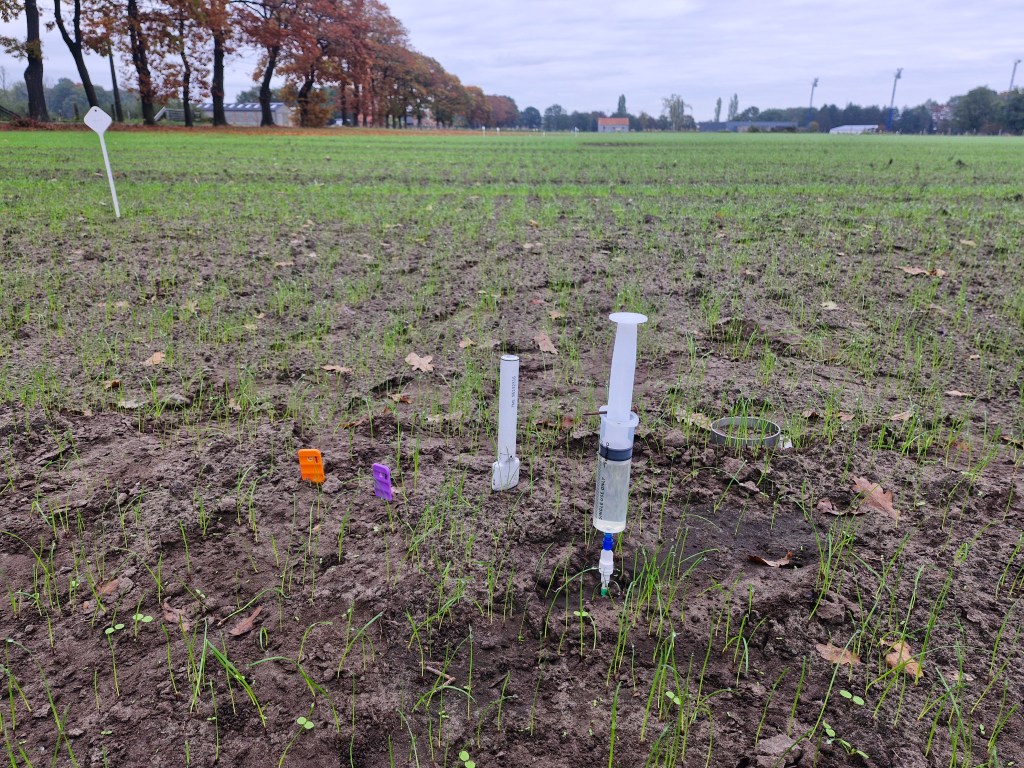
The research will be conducted at Universiteit Antwerpen within the Department of Bioscience Engineering. The GitHub-hosted repository for my project is available at this link.
Background
Enhanced rock weathering accelerates a natural geological process: when silicate minerals dissolve, they consume CO₂ and ultimately store it as bicarbonate or carbonate minerals.
However, soils are biologically active systems. Adding rock powder changes:
- Soil pH
- Mineral formation (e.g., iron and aluminum oxides)
- Calcium availability and carbonate formation
- Microbial community composition
- Soil aggregation
Each of these factors can influence how soil organic matter is stabilized — or destabilized.
Carbon removal is only meaningful if the stored carbon persists for decades to centuries. Therefore, this project will focus on carbon permanence, not only carbon quantity.
Objectives
The research will build on an established enhanced rock weathering field trial in Belgium.
1. Quantify Soil Carbon Persistence Under ERW
This project will:
- Separate soil organic matter into functional fractions
- Measure radiocarbon (¹⁴C) signatures to determine carbon age
- Calculate turnover times and mean residence times
- Develop a time-explicit climate benefit merit linking storage to persistence
2. Identify Abiotic Stabilization Mechanisms
The project will determine how ERW influences:
- Formation of secondary minerals (Fe/Al oxides)
- Carbonate accumulation
- Soil aggregation and physical protection of organic matter
- Interactions between inorganic and organic cementing agents
Chemical extractions and aggregate stability tests will be used to disentangle these mechanisms.
3. Determine Microbial Controls on Carbon Stabilization
Soil microbes regulate carbon cycling. The project will evaluate:
- Microbial community composition (bacteria and fungi)
- Functional diversity and substrate use
- Microbial carbon use efficiency (CUE)
- Production of organic acids and siderophores
By combining microbial and geochemical data, the project will assess whether ERW promotes microbial pathways that enhance long-term carbon storage. This interdisciplinary approach will allow identification of both direct and indirect drivers of soil carbon persistence.
Expected outcomes
This project will:
- Deliver the first time-explicit assessment of soil organic carbon persistence under enhanced rock weathering
- Clarify whether ERW enhances or destabilizes soil organic matter
- Identify the biological and mineral mechanisms controlling carbon stabilization
- Provide a predictive framework linking mineral amendments, microbes, and long-term carbon storage
Ultimately, the work will improve how soil-based carbon removal strategies are evaluated, ensuring that carbon accounting reflects both quantity and permanence.

 Teneille Nel - Researcher